Home › Common Problems › Stamped Concrete Joint Failure
Stamped Concrete Joint Failure
in Asheville, NC
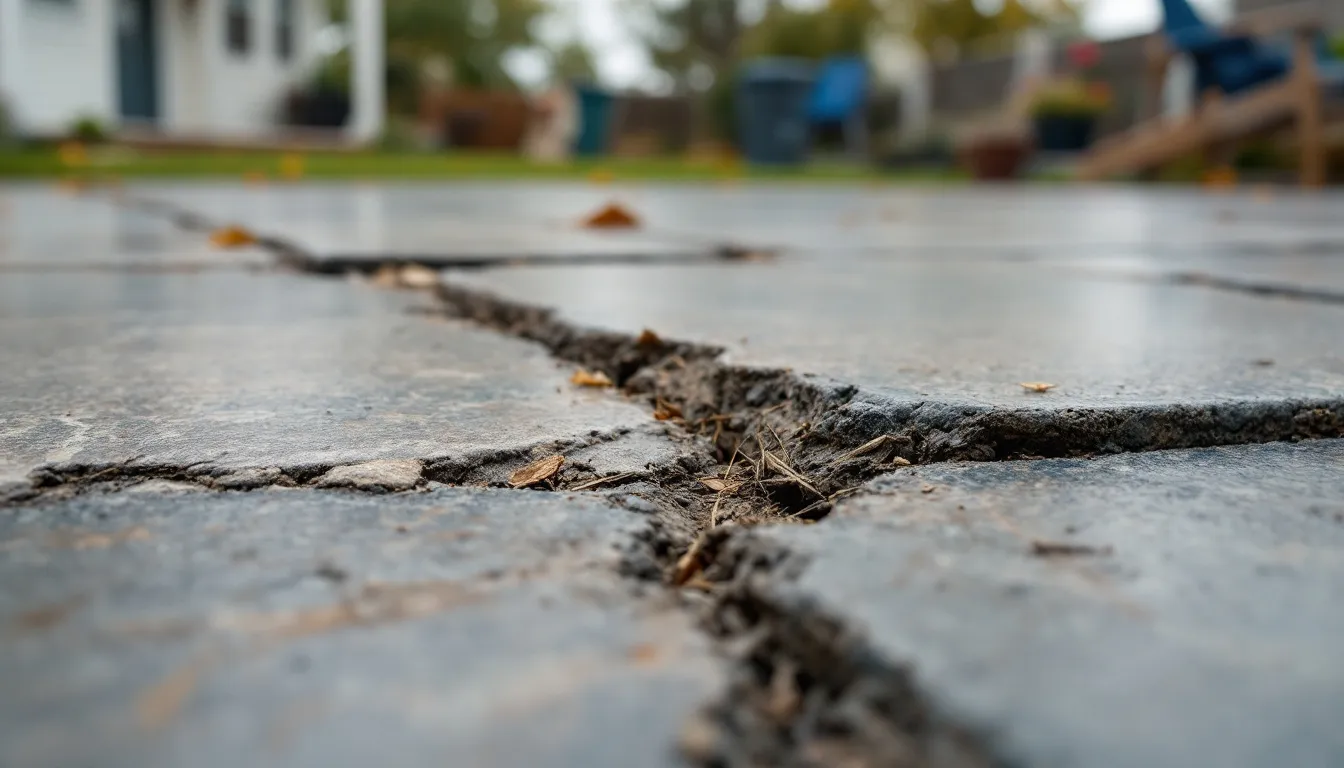
Control joints are the straight lines cut into a stamped concrete slab to give it a planned place to move. They are filled with a flexible material so water cannot get in. In Asheville, clay soil pushes and pulls at the slab through most of the year, and that movement works the joint filler loose over time. Once a joint is open, water gets into the crack, freezes in January and February, and starts pushing the slab apart on both sides.
Asheville Stamped Concrete Pros helps Asheville, NC homeowners fix stamped concrete joint failure — call for a free inspection.
Quick Answer
Control joint filler fails when the material in the joint hardens, cracks, or pulls away from the concrete on both sides. In Asheville, the ground movement caused by clay soil expanding and contracting tears joints open faster than in stable soil. Routing out the old filler and packing in a fresh flexible polyurethane sealant fixes it. Open joints let water in and make cracking in the slab itself more likely, so this is worth fixing before winter.
Telltale Signs
Warning Signs to Watch For
- Visible gap along a straight joint line where filler has pulled away
- Old filler material crumbling or sitting loose in the joint
- Crack running parallel to and alongside a control joint
- Water sitting in the joint after rain instead of draining through
- Joint filler sticking up above the surface level and then breaking off
Root Causes
What Causes Stamped Concrete Joint Failure?
Clay Soil Movement Tearing Joints
Asheville's clay soil expands when it absorbs rain and shrinks when it dries out. That movement pulls the two sides of a control joint apart and then pushes them back together through the seasons. Rigid joint filler materials can't keep up with that movement and crack out within a few years.
The Fix
Flexible Polyurethane Joint Resealing
The old filler is routed out of the joint and the channel is cleaned. A flexible polyurethane sealant is installed with a foam backer rod underneath to control the depth. Polyurethane stays flexible through seasonal movement instead of cracking like rigid fillers do.
Original Joint Filler Past Its Lifespan
Most standard joint sealants last around 5 to 7 years before UV exposure and repeated movement break them down. Stamped concrete driveways and patios installed in the Asheville building booms of the early 2000s are now well past that window and joints are failing across many properties at the same time.
The Fix
Full Joint Replacement
All joints are routed clean, inspected for depth, and filled with fresh polyurethane sealant over new backer rod. Replacing all joints at once keeps maintenance predictable and prevents missed sections from letting water in.
Self-Diagnosis
Which Cause Applies to You?
Check the signs you're observing to narrow down the likely root cause before your inspection.
| What You're Seeing | Clay Soil Movement Tearing Joints | Original Joint Filler Past Its Lifespan |
|---|---|---|
| Joint gaps are wider in dry summer months than in spring | ||
| Filler is crumbling and chalky rather than flexible | ||
| Multiple joints across the entire slab are failing at the same time | ||
| Cracks are forming in the slab beside the open joints | ||
| Joint failure is worse on sections near planted beds that get watered often |
Free Quote
Get a free quote in Asheville
No obligation — tell us what's going on and we'll text you back shortly.
Other Problems
Services That Fix This
Stamped Concrete Joint Failure Near You
Also Helpful