Home › Common Problems › Stamped Concrete Algae and Staining
Stamped Concrete Algae and Staining
in Asheville, NC
Asheville's wet climate and heavy tree canopy mean stamped concrete that sits under shade stays damp for most of the spring and fall. That moisture is all algae and mold need to grow on the surface. North-facing patios and driveways in shaded yards are the worst affected. Algae is slippery and the dark staining it leaves behind is hard to get rid of once it works into an unsealed surface.
Asheville Stamped Concrete Pros helps Asheville, NC homeowners fix stamped concrete algae and staining — call for a free inspection.
Quick Answer
Algae, mold, and dark stains grow on stamped concrete when the surface stays damp in shaded areas. In Asheville, tree cover and north-facing patios in neighborhoods like Black Mountain and Swannanoa keep concrete wet long enough for algae to take hold. Pressure washing removes most growth, and applying a fresh sealer after cleaning slows regrowth. Algae makes concrete slippery, so treat it before someone falls.
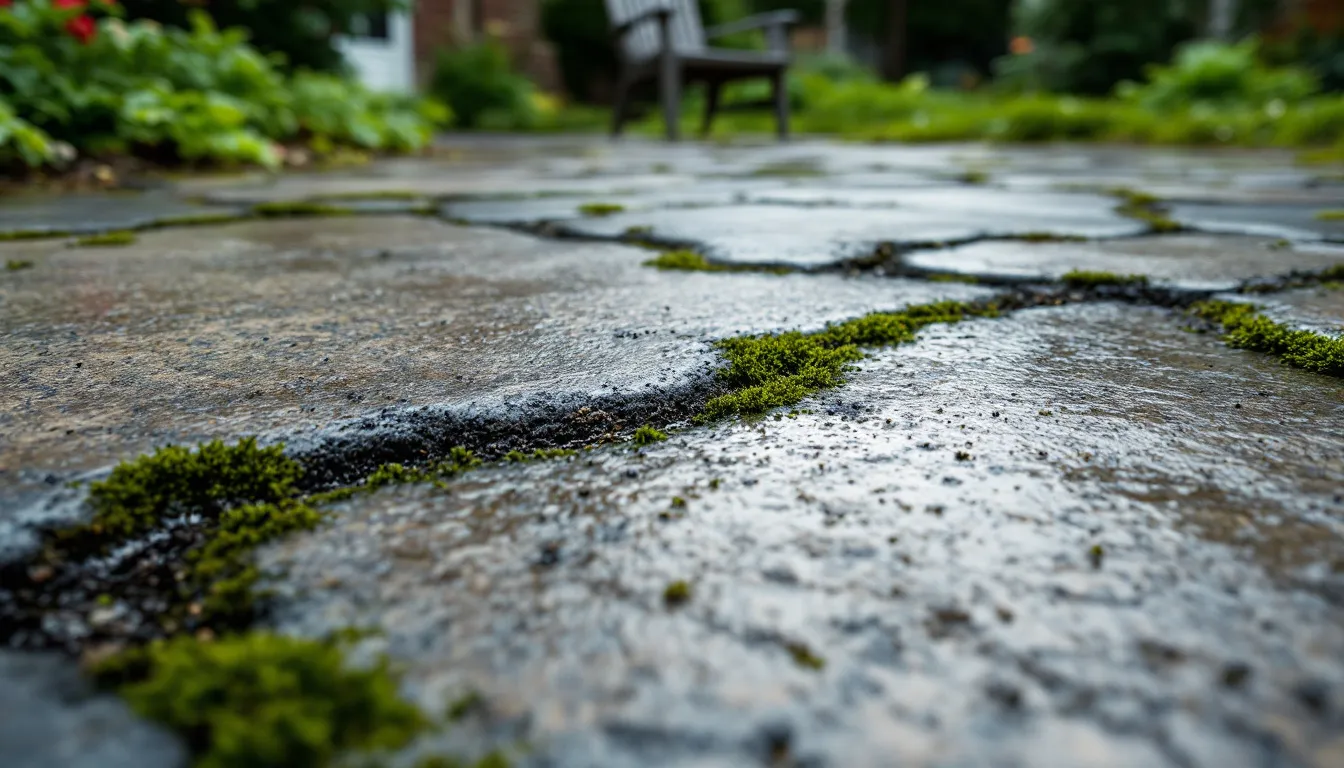
Telltale Signs
Warning Signs to Watch For
- Green film on the surface, especially in shaded or low-lying areas
- Black streaks running down sloped sections
- Slimy feeling underfoot when the concrete is wet
- Dark staining that does not wash off with a garden hose
- Staining concentrated in the textured valleys of the stamp pattern where water collects
Root Causes
What Causes Stamped Concrete Algae and Staining?
Shade and Moisture Holding on Surface
In tree-heavy areas of Asheville like Lakeshore Drive or parts of Weaverville, concrete under the canopy may only get two or three hours of direct sun a day. Concrete that does not dry out fully between rains grows algae and mold just like any other damp surface does.
The Fix
Pressure Washing and Antimicrobial Sealer
A commercial-strength concrete cleaner combined with pressure washing removes algae down to the surface. An antimicrobial or mold-resistant sealer applied after cleaning slows the regrowth cycle by reducing how long moisture sits on the surface.
Failed or Missing Sealer
An intact sealer creates a smoother surface that dries faster and gives algae less to grip. Once the sealer breaks down, the rough texture of stamped concrete acts like a sponge, holding moisture and organic debris in all the small grooves of the stamp pattern.
The Fix
Surface Cleaning and Sealer Reapplication
The concrete is cleaned, rinsed, and fully dried before a fresh sealer coat is applied. A quality acrylic or polyurethane sealer fills the surface texture enough to drain faster and makes future cleaning much easier.
Self-Diagnosis
Which Cause Applies to You?
Check the signs you're observing to narrow down the likely root cause before your inspection.
| What You're Seeing | Shade and Moisture Holding on Surface | Failed or Missing Sealer |
|---|---|---|
| Growth is on the side of the slab that faces away from the sun | ||
| Staining is in the deepest grooves of the stamped texture | ||
| Algae comes back within weeks of pressure washing | ||
| Water does not bead on the surface at all | ||
| Black streaking follows the direction water drains off the slab |
Free Quote
Get a free quote in Asheville
No obligation — tell us what's going on and we'll text you back shortly.
Other Problems
Services That Fix This
Stamped Concrete Algae and Staining Near You
Also Helpful