Home › Common Problems › Stamped Concrete Sealer Peeling
Stamped Concrete Sealer Peeling
in Asheville, NC
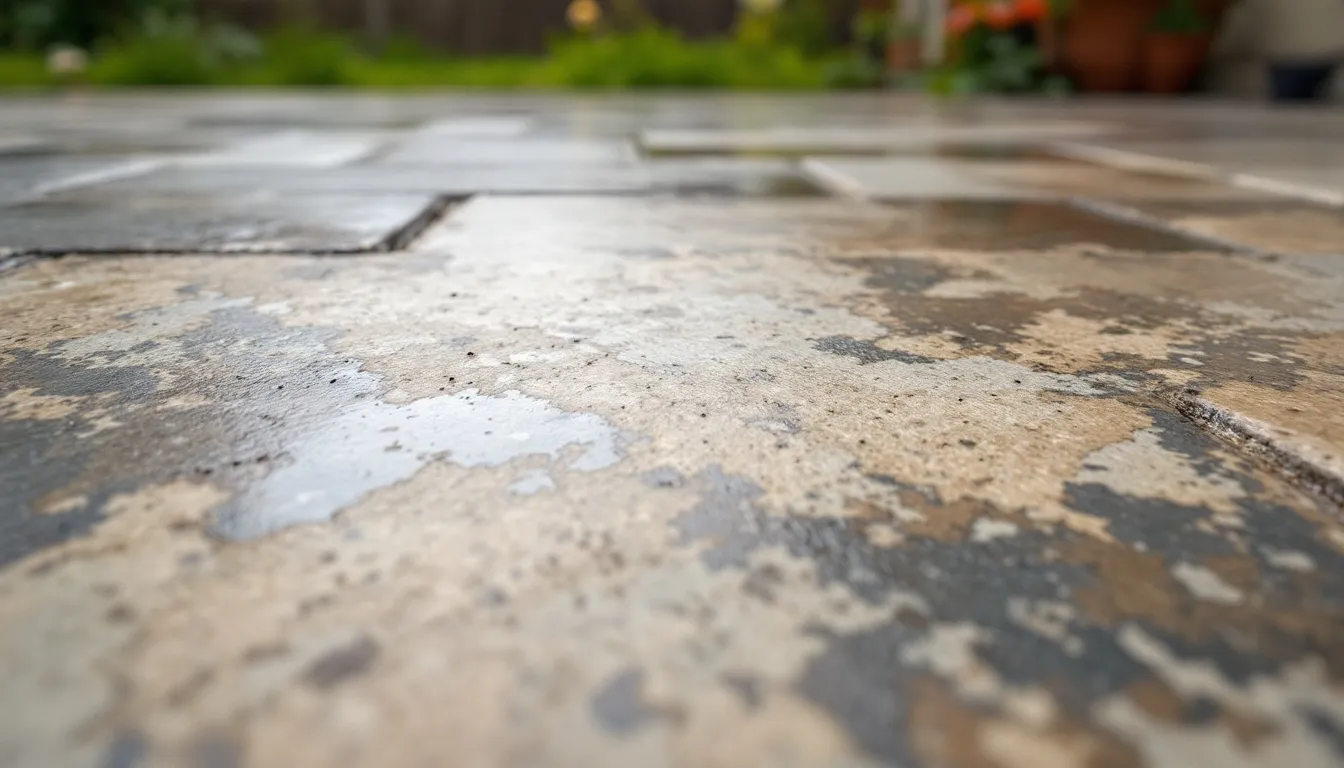
Sealer peeling is one of the most common complaints on stamped concrete in Asheville, especially on patios installed in neighborhoods like Haw Creek or Weaverville where humidity stays high most of the year. The sealer bubbles up, turns white, or flakes off in sheets and it looks terrible fast. Peeling sealer also leaves bare spots where water gets into the slab and starts breaking down the color underneath.
Asheville Stamped Concrete Pros helps Asheville, NC homeowners fix stamped concrete sealer peeling — call for a free inspection.
Quick Answer
Sealer peels when it was applied over a damp surface, applied too thick, or applied on top of old sealer that was already failing. In Asheville's humid summers, concrete holds moisture longer than people expect, and sealer traps that moisture underneath. The fix is to strip all the old sealer off, let the slab dry fully, and apply new sealer in thin coats. Don't skip the stripping step or the new sealer will peel again.
Telltale Signs
Warning Signs to Watch For
- Sealer lifting off in thin sheets or flakes
- Bubbles or blisters forming under the sealer film
- White cloudy patches where the sealer has turned opaque
- Bare concrete showing through where sealer has fallen off
- Edges of remaining sealer curling up off the surface
- Peeling gets worse after a hot sunny day follows a rainy one
Root Causes
What Causes Stamped Concrete Sealer Peeling?
Sealer Applied Over Wet Concrete
In Asheville summers, humidity often stays above 70 percent and concrete takes much longer to dry than it would in a drier climate. If sealer goes on while the slab is still holding moisture, the water vapor pushes up against the sealer film from underneath and breaks the bond.
The Fix
Full Sealer Strip and Reapplication
All existing sealer is removed with a chemical stripper, the slab is allowed to dry for at least two full days with no rain, and new sealer is applied in two thin coats. A moisture meter check before application prevents the same problem from repeating.
Sealer Applied Too Thick
Thick sealer coats don't cure the same way thin ones do. The outside surface skins over while the inside stays soft, and that trapped layer never bonds properly to the concrete. Heavy coats are more common when contractors are trying to speed up a job or when a homeowner adds sealer themselves.
The Fix
Sealer Strip and Thin-Coat Reapplication
The thick failed sealer is stripped back to bare concrete, then new sealer is applied in two thin passes with a roller. Thin coats bond better, cure all the way through, and flex better when the slab expands in summer heat.
New Sealer Over Old Failed Sealer
Putting new sealer on top of old peeling sealer just gives you two layers that can both fail. The new coat bonds to the loose old coat instead of the concrete, so within a season you are back to peeling. This is a shortcut that gets used a lot on budget resealing jobs.
The Fix
Complete Sealer Removal and Fresh Application
A chemical stripper dissolves both the old and new sealer layers back to bare concrete. Once the surface is clean and dry, fresh sealer is applied correctly. The result actually lasts.
Self-Diagnosis
Which Cause Applies to You?
Check the signs you're observing to narrow down the likely root cause before your inspection.
| What You're Seeing | Sealer Applied Over Wet Concrete | Sealer Applied Too Thick | New Sealer Over Old Failed Sealer |
|---|---|---|---|
| Peeling started within weeks of a new sealer application | |||
| White cloudy patches appear after rain or high humidity | |||
| Sealer is visibly thicker in some spots and thin in others | |||
| Peeling only got worse after a second coat of sealer was added | |||
| Bubbles appear on the surface during hot afternoons | |||
| Multiple layers of sealer are visible at a peeled edge |
Free Quote
Get a free quote in Asheville
No obligation — tell us what's going on and we'll text you back shortly.
Other Problems
Services That Fix This
Stamped Concrete Sealer Peeling Near You
Also Helpful